
String Instruments
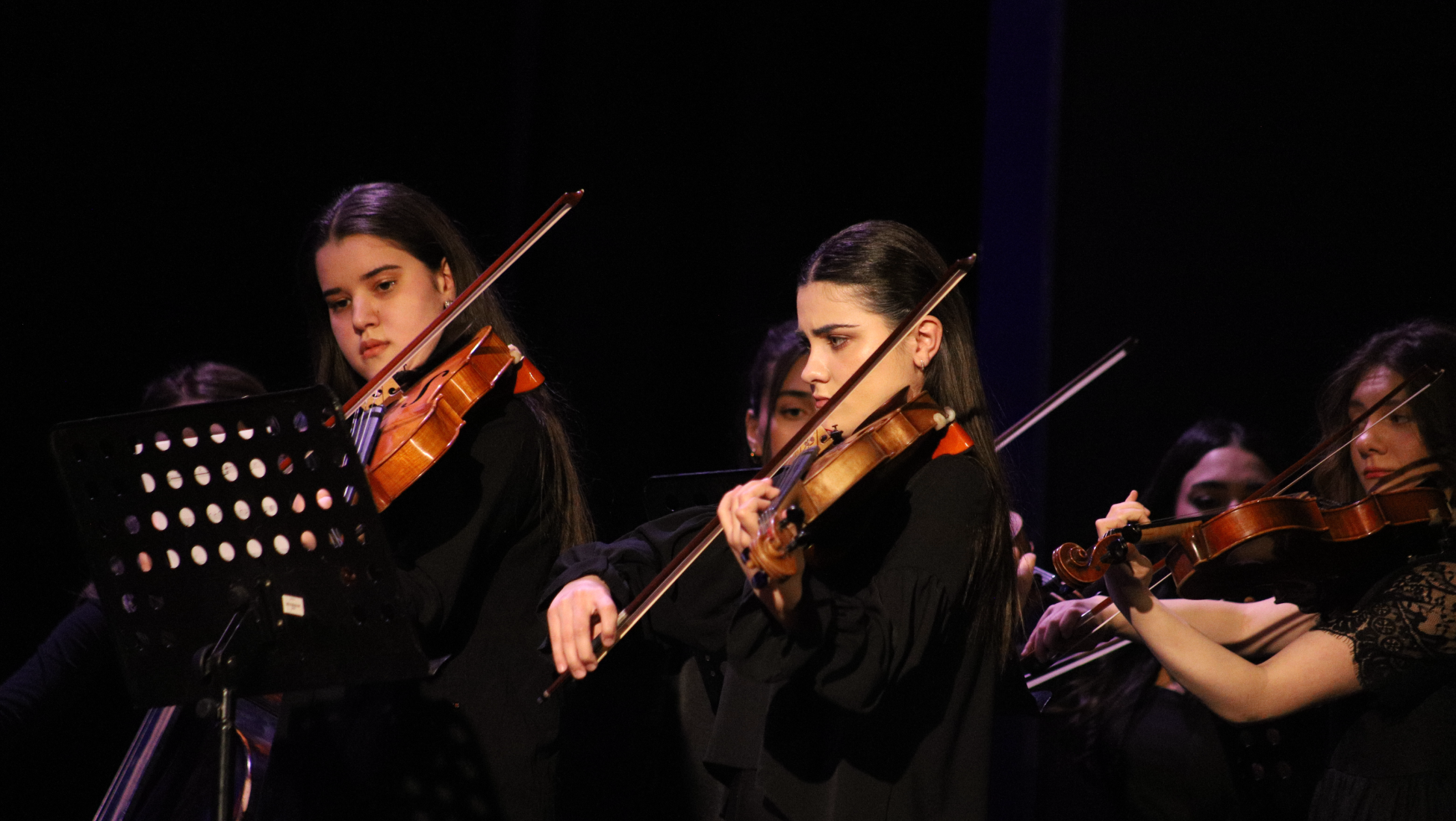
Instrumental performance - String Instruments
General Information
- Qualification awarded: Bachelor of Arts
- Specialization / Educational Program Code: 021502.00.6 / 021502.01.6
- Qualification level: NQF Level 6
- Academic workload: 240 ECTS credits
- Duration and mode of study: 4 years, full-time study
Specialized Fields (by Chairs)
- Chairs of String and Chamber Music: violin, viola, cello, double bass, guitar, harp.
Program Objectives
- Develop high performance mastery, stage skills, and stylistically accurate interpretation of repertoire across various eras.
- Prepare students for collaborative creative work in ensemble and orchestral settings.
Educational Program Intended Learning Outcomes
Upon successful completion of the program, the student will be able to:
- Perform as a soloist and ensemble/orchestral musician in classical music concerts.
- Independently conduct preparatory and analytical work for performing a composition.
- Master sound production, articulation, performance terminology, and techniques appropriate to various musical styles.
- Demonstrate in-depth knowledge of Armenian and foreign performance repertoire from various historical eras.
- Collaborate effectively with other performers, participating properly in joint rehearsals and working within orchestral or chamber ensembles.
- Apply acquired knowledge in the field of music pedagogy and teaching methodology.
Program Structure (by fields)
The curriculum includes 240 credits (230 course credits + 10 final attestation credits):
- STRING INSTRUMENTS: Major subject and ensembles (Symphonic Orchestra, Chamber Ensemble, String Quartet, Fundamentals of Jazz Improvisation, Flamenco by instrument) – 150 credits
- General Professional: 56 credits
- Humanities / Pedagogical: 36 credits
Admission Requirements
- Examinations: Major subject (program performance), solfège (dictation), harmony.
- Please review the requirements and document list in the Admissions section.
Unified Inclusive Education Policy
YSC promotes full learning for all its students, including individuals with special educational needs (SEN), by providing the necessary conditions to acquire professional knowledge, skills, and competencies.

